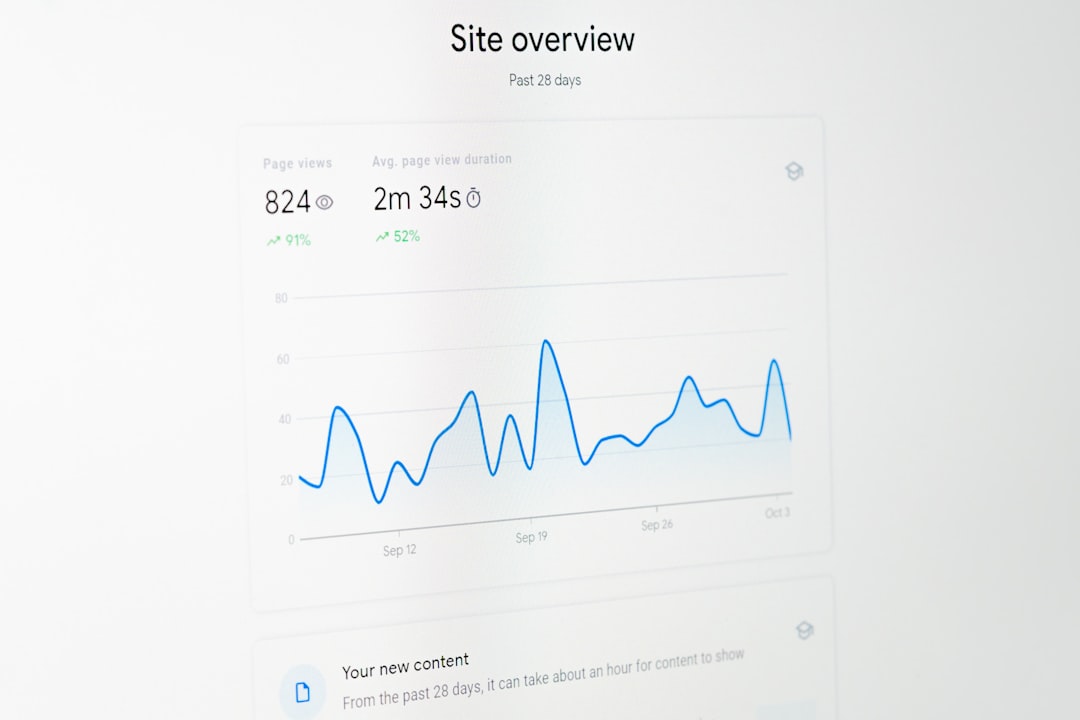
Cometly's first-week numbers look like the kind of growth story startup founders tell for years: $53,800 in monthly recurring revenue, a $646,000 annualized run rate, and more than $251,000 collected in seven days.
Those figures describe the same launch, but they do not measure the same thing. Affiliates concentrated demand into one week, while annual prepayments made cash collections much larger than MRR. The launch proved that people would pay. It did not mean Cometly had created a quarter-million-dollar monthly business overnight.
The more revealing number came later. TrustMRR's verified payment data now puts Cometly at $214,289 in MRR, $9.76 million in all-time Stripe collections, and 297 active subscriptions. Current MRR is roughly four times the launch figure.
That growth came with a strategic shift. Grant Cooper and Matt Pattoli started with a tool for marketers struggling to trust Facebook's conversion reporting. Cometly now sells a broader promise to B2B SaaS companies: connect advertising to pipeline and closed-won revenue, then send better customer signals back to the ad platforms.
Cometly's Revenue at a Glance
The launch and current figures show two different stages of the business. The first measured the power of distribution. The latest data measures the recurring base that remained after the launch window closed.
Three Numbers That Are Often Confused for One Another
Recurring revenue, a point-in-time comparison, and a total that only ever rises. They answer different questions.
Source: TrustMRR, from Stripe-connected records. These are not audited financial statements. Subscriptions do not necessarily equal customers, and annual billing can make short periods uneven.
Recurring Revenue, Launch Week Against Today
The same measure at two points in time, which is the only like-for-like comparison available.
Sources: Rewardful case study (launch) and TrustMRR (current). The public record between these two points is thin, so the shape of the curve between them is unknown.
The current figures come from Stripe-connected records on TrustMRR, but they are not audited financial statements. All-time collections are gross payment activity, subscriptions do not necessarily equal customers, and annual billing can make short periods uneven.
Separating those measures has become a habit across our Deep Dives. When we looked at Comp AI, its $8 million ARR claim sat beside just $12,542 in Stripe subscription MRR, and annual contracts were one plausible explanation the company never confirmed. At Cometly, the case study says it outright: many launch customers paid annually.
An Affiliate Launch Solved the Cold-Start Problem
Most new software companies launch with an empty customer list and an equally empty distribution channel. Cometly arrived with an audience borrowed from affiliates.
Rewardful's launch case study says the company used affiliate partners to reach performance marketers, offering recurring commissions and tracking referrals through Stripe. It reports $147,500 collected on launch day and another $103,500 during the rest of the week.
Where the $251,000 Came From
Cash collected during launch week, as reported in the affiliate platform's case study.
Source: Rewardful case study. These are cash collections, not recurring revenue. The same week produced $53,800 in MRR, because many customers paid annually.
The launch produced $53,800 in MRR, but the cash total passed $251,000 because many customers paid annually. That distinction matters. Upfront annual payments can finance product development and customer acquisition without outside capital, even when recognized recurring revenue is far lower.
The case study quotes the company's explanation directly: "Using an affiliate for our product launch allowed us to get in front of his community of potential customers." The tactic solved the first problem every new SaaS company faces: getting a credible product in front of enough buyers at the same time.
Our investigation into Submagic found affiliates doing a different job: one channel among several, started 30 days after its first customer because there was no marketing budget, and worth about 20% of revenue by 2025. Cometly used the same channel far more aggressively, concentrating affiliate demand into a single launch week.
The Founders Built Around a Broken Attribution System
Cometly's team page identifies Grant Cooper and Matt Pattoli as founders. They entered a market in which marketers could see clicks inside ad platforms but increasingly struggled to connect those clicks to purchases, renewals, and sales pipeline.
Apple's privacy changes, browser restrictions, ad blockers, and fragmented customer journeys weakened browser-based tracking. A Management Science study found a 37% decline in click-through rates for conversion-optimized Meta ads after Apple's App Tracking Transparency policy. The study examined ecommerce advertising, so its percentage should not be transferred directly to Cometly's B2B customers. It still shows why advertisers became more willing to pay for first-party measurement.
Rewardful described Cometly as bootstrapped at launch. No verified institutional funding round appears in the public record reviewed for this article. That does not prove the company has never used debt or private capital, but the available evidence supports a founder-financed, customer-funded launch rather than a venture-backed one.
The Product Moved From Ad Tracking to Revenue Attribution
Cometly's current product is built around a longer chain than "ad clicked, form submitted." It collects first-party events, joins them to customer and revenue data, analyzes the journey, and sends selected outcomes back to advertising systems.
The Loop Cometly Sells
Four steps, ending where it started. The last one is what separates the product from a reporting dashboard.
Source: Cometly's own product documentation. This describes what the product is designed to do, not an independent test of how well it does it.
Capture more of the customer journey
The Comet Pixel and server-side tracking record visits and conversion events without depending entirely on a browser cookie. This can preserve more signal when ad blockers, cross-device behavior, or browser restrictions interrupt client-side tracking.
Connect marketing to CRM and payment data
Cometly links advertising data with systems such as Stripe, HubSpot, and Salesforce. For a B2B SaaS company, the valuable outcome may be a qualified opportunity, an annual contract, or a renewal rather than a lead form. That lets teams compare campaigns against pipeline, customer acquisition cost, lifetime value, and closed-won ARR.
Send revenue signals back to ad platforms
The platform can send enriched conversion events to Meta, Google, and LinkedIn. The purpose is operational, not merely analytical: give bidding algorithms more examples of customers that produced revenue, rather than asking them to optimize for the cheapest lead.
Add AI above the measurement layer
Cometly now includes an AI agent, an AI Ads Manager, and an MCP connection for querying attribution data from compatible AI tools. These features make the data easier to interrogate, but the quality of the answer still depends on identity matching, clean CRM stages, and accurate payment events underneath it.
Five Years of Growth Point to an Upmarket Shift
TrustMRR's current MRR is about 3.98 times Cometly's launch-week MRR. The trajectory is meaningful, but it is not the same as compounding at launch-week speed. The company's public operating record is thin between those two endpoints, so claims about a smooth year-by-year curve would be speculation.
The customer mix appears to have changed. Cometly's present messaging focuses on B2B SaaS, CRM pipeline, closed-won ARR, and sales-led as well as product-led funnels. Dividing $214,289 in MRR by 297 active subscriptions produces roughly $721 per subscription per month. That is only directional because a subscription is not necessarily a customer and annual billing can distort the comparison. Still, it suggests a business that is no longer built solely around low-cost self-service plans.
The upmarket move also changes what Cometly must prove. A performance marketer may buy better pixel data. A SaaS executive needs a defensible answer to a harder question: which channels created customers that stayed and paid?
Cometly Competes Across Three Attribution Markets
Search results often place every attribution tool in one comparison list. Buyers are actually choosing among products built around different data sources, sales cycles, and definitions of a conversion.
Three Groups, Three Definitions of a Conversion
Cometly sits between the second and third groups, which is also where its positioning has moved.
Grouping by product focus and buyer, based on how each vendor positions itself publicly. It is not a feature-by-feature comparison or a ranking.
Cometly sits between the second and third groups. Its edge is the combination of paid-ad tracking, CRM and Stripe revenue, conversion feedback, and an interface that serves growth teams without requiring a full data-warehouse project. None of those components is exclusive. The differentiation is packaging the loop from ad click to closed-won revenue and back to the ad platform.
Its strongest substitute may be software customers already own. GA4, HubSpot, Salesforce, Meta, and Google all provide pieces of the same picture. Cometly has to make the connected view more useful than assembling reports from those systems separately, a familiar problem for anyone tracking digital marketing performance across several tools.
Attribution Is Valuable, but It Is Not Causality
Every attribution model assigns credit according to a rule. First-touch favors discovery. Last-touch favors the final interaction. Linear and U-shaped models divide credit differently. Changing the model can change the apparent winner without changing what happened.
Incrementality testing asks a different question: what would have happened without the ad? Marketing-mix modeling looks at broader patterns across channels and time. Cometly can improve the record of who touched what before a sale, but no dashboard can turn an allocation rule into objective causal truth. The same gap shows up in traffic tools, which can classify most of Candy AI's desktop visits as affiliate traffic without showing what those affiliates caused.
That limitation does not make attribution useless. It defines the standard Cometly must meet as it grows: its data should change budget decisions, improve ad-platform inputs, and help teams run better experiments. A cleaner dashboard is valuable. A measurable improvement in customer acquisition is more valuable.
Cometly Converted Launch Attention Into a Durable Business
The $251,000 launch week was a distribution achievement. Affiliates supplied reach, annual plans supplied working capital, and a timely attribution problem supplied urgency.
The stronger evidence is what followed. More than $9.75 million in verified Stripe collections and roughly $214,000 in MRR show that Cometly built a recurring business beyond its launch event. Its product also moved closer to the systems where B2B companies record actual value: CRM stages, subscriptions, renewals, and closed-won revenue.
Cometly's next stage will depend less on explaining why ad platforms miss conversions. Most growth teams already understand that problem. The harder opportunity is proving that a connected measurement layer helps them acquire better customers, not simply assign credit with more confidence.